
Root Canal Treatment
Root canal treatment, also known as endodontic treatment, is used to manage conditions affecting a tooth’s pulp/nerve. A tooth’s pulp may die and become infected usually due to trauma or tooth decay. Root canal treatment allows your dentist to remove this dead or diseased tissue inside the tooth, thereby alleviating painful symptoms and preserving the tooth.
If performed early enough, root canal treatment could allow a tooth to survive as long as the adjacent teeth. If left untreated, the infection could spread, lead to severe pain and/or abscess formation. In the event of significant disease, a tooth may no longer be able to be retained by root canal treatment. The length of time taken to seek dental treatment could mean the difference between preserving a natural tooth and the need to remove one which now has a hopeless prognosis.
Root canal treatment provides overall pain relief (contrary to popular belief) by removing the tissue causing pain and inflammation.
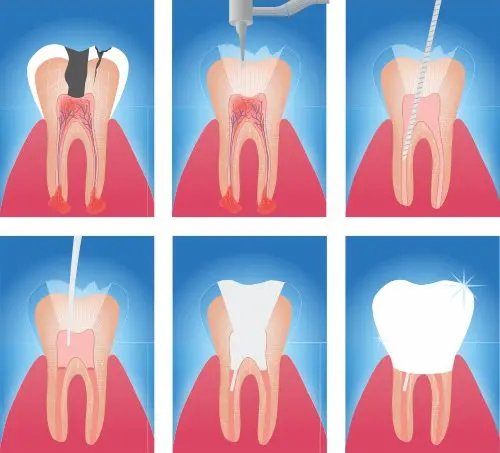
Root canal treatment may span the course of two or more appointments, depending on your personal circumstances and the condition of your tooth. After the tooth’s pulp is removed, the inside of the tooth is cleaned and disinfected. Where necessary, the tooth may be filled with medication in between visits to ensure it is adequately disinfected. This medication can also act as a sedative for the tooth and is sealed inside the tooth with temporary filling, so that the tooth can function like normal in between appointments. At the final root canal appointment, the canals are then sealed with a long-lasting, rubber-like material to prevent future infection. Finally, your dentist will commence restorative treatment (based on each individual’s circumstances) to return the tooth to its required form.
Root canals, while often misunderstood, are vital procedures for preserving damaged teeth and relieving pain. Our skilled team is well-versed in performing root canal treatments with precision and care. When a tooth becomes infected or inflamed deep within the pulp, a root canal becomes necessary to remove the damaged tissue and restore the tooth’s health. Through this procedure, we can alleviate discomfort and save your natural tooth, preventing the need for extraction. Trust us to guide you through the root canal process with expertise and compassion, ensuring a comfortable experience and a restored smile.
Read more about root canals below.
Frequently Asked Questions
Why do I need a root canal?
A root canal is recommended when the soft tissue inside a tooth (the pulp or nerve) becomes infected or damaged. This can happen due to deep decay, cracks, injury, or previous dental treatment. Root canal treatment helps remove the infection and preserve your natural tooth.
Are root canals painful?
Despite their reputation, root canals are designed to relieve pain rather than cause it. The procedure is performed under local anaesthetic, and most patients are comfortable during treatment. Some mild tenderness afterwards is normal as the tooth heals.
What are the signs that I may need a root canal?
Symptoms can include ongoing tooth pain, sensitivity to hot or cold, pain when biting or chewing, swelling around the tooth, a pimple or abscess on the gum, or tooth discolouration. However, some infected teeth may have few or no symptoms, which is why dental examinations are important.
Can antibiotics cure a tooth infection instead of a root canal?
Antibiotics may help control the spread of infection in certain situations, but they cannot remove infected tissue from inside the tooth. Root canal treatment addresses the source of the infection by cleaning and sealing the inside of the tooth.
How long does a root canal take?
Treatment time varies depending on the tooth and the complexity of the root system. Some root canals can be completed in one appointment, while others may require multiple visits to ensure the tooth is properly cleaned and treated.
Can I go back to work after a root canal?
Most people can return to their normal activities after treatment. If you have had local anaesthetic, you should take care not to bite your cheek or tongue until the numbness has worn off.
What happens if I delay having a root canal?
Delaying treatment can allow the infection to progress, potentially causing increased pain, swelling, abscess formation, or making the tooth more difficult to save. Early assessment gives the best chance of preserving the natural tooth.
Will my tooth be completely normal after a root canal?
A root canal-treated tooth can function like a natural tooth once it has been restored. Depending on the condition of the tooth, your dentist may recommend a crown or other restoration to provide additional strength and protection.
How long does a root canal-treated tooth last?
With good oral hygiene, regular dental visits, and appropriate restoration, a root canal-treated tooth can last many years and may last as long as your natural teeth.
Is extraction better than having a root canal?
Whenever possible, preserving your natural tooth is usually preferred. A root canal allows you to keep your tooth and avoid the need for replacement options such as implants or bridges. Your dentist will discuss all available choices based on your individual situation.
Can a root canal fail?
Although root canal treatment has a high success rate, problems can occasionally occur due to complex root anatomy, new infection, or damage to the tooth. If this happens, your dentist can discuss options such as retreatment or other solutions.
How should I care for my tooth after a root canal?
Continue brushing and flossing normally, attend recommended follow-up appointments, and avoid chewing hard foods on the treated tooth until your final restoration has been completed.